
Happily Ever After
How Disney rewrote tragedy and how we rewrote ourselves

Once upon a time… it hurt.
A strange sentence to hear, I know.
We grew up on Disney after all. A world where magic solves things, goodness triumphs, and every heartbreak gets sung away by woodland creatures.
But here’s the part no one mentioned: Fairy tales were never meant to be gentle, comforting things.
Long before animation and orchestral scores, fairy tales were carved out of hunger, fear, winters that took children, and adults who believed stories should prepare the young for danger, not shield them from it. Told around fires, in famine, in grief, they were designed to scare, not soothe. These weren’t bedtime tales. They were warnings disguised as wonder.
Picture a village lit only by embers, wolves pacing the tree line, cold pressing against thin walls. In a world where winters could kill quietly and strangers were a real threat, stories had teeth. Fear wasn’t entertainment; it was education.
Almost every Disney classic we adore today stands on the bones of those darker, older tales. Their violence was trimmed away, their grief was scrubbed clean, their endings stitched into a smile. Disney softened the endings, not the existence of danger. Their worlds still held death, betrayal, loss, and fear; just written in a way that a child could survive the telling.
It’s important to say this too: there is no single “original” fairy tale. These stories travelled through memory and firelight. They changed shape with every teller, sharpened in one village and softened in another. Long before Disney, Perrault, the Grimms, and Victorian collectors were already polishing the rougher edges. So Disney didn’t invent the brightening; it simply perfected the gentlest version.
Consider what those stories used to look like.

Cinderella
In Grimm’s telling, she is “Aschenputtel,” ash girl, forced to sleep among cinders. Her wishes are granted not by a fairy godmother, but by a hazel tree planted on her mother’s grave. The stepsisters slice off their own heels and toes to fit the slipper and later, pigeons peck their eyes out as punishment for their cruelty and they’re condemned to live out their days as sightless beggars. Unflinching brutality.
The Little Mermaid
Andersen gives her no wedding, no reunion. Every step on land feels like walking on knives. The prince never loves her back and to survive, she must kill him. She refuses to do so. At dawn, her heartbreak is so complete, she dissolves into sea foam. No happily ever after. Just disappearance.
Snow White
In Grimm’s version, the queen demands the girl’s lungs and liver as proof of death. The dwarfs place Snow White in a glass coffin for display, not devotion. And when the queen attends the wedding, she’s punished by being forced into red-hot iron shoes and made to dance until she dies. No redemption arc. Just fire and vengeance.

Sleeping Beauty
In Basile’s version, there is no kiss, no romantic awakening. A wandering king finds her unconscious in the tower and rapes her. She gives birth to twins while still asleep, one of whom sucks the splinter from her finger, accidentally waking her. She opens her eyes, not to romance, but to confusion, motherhood, and the consequences of a life lived without consent.
Rapunzel
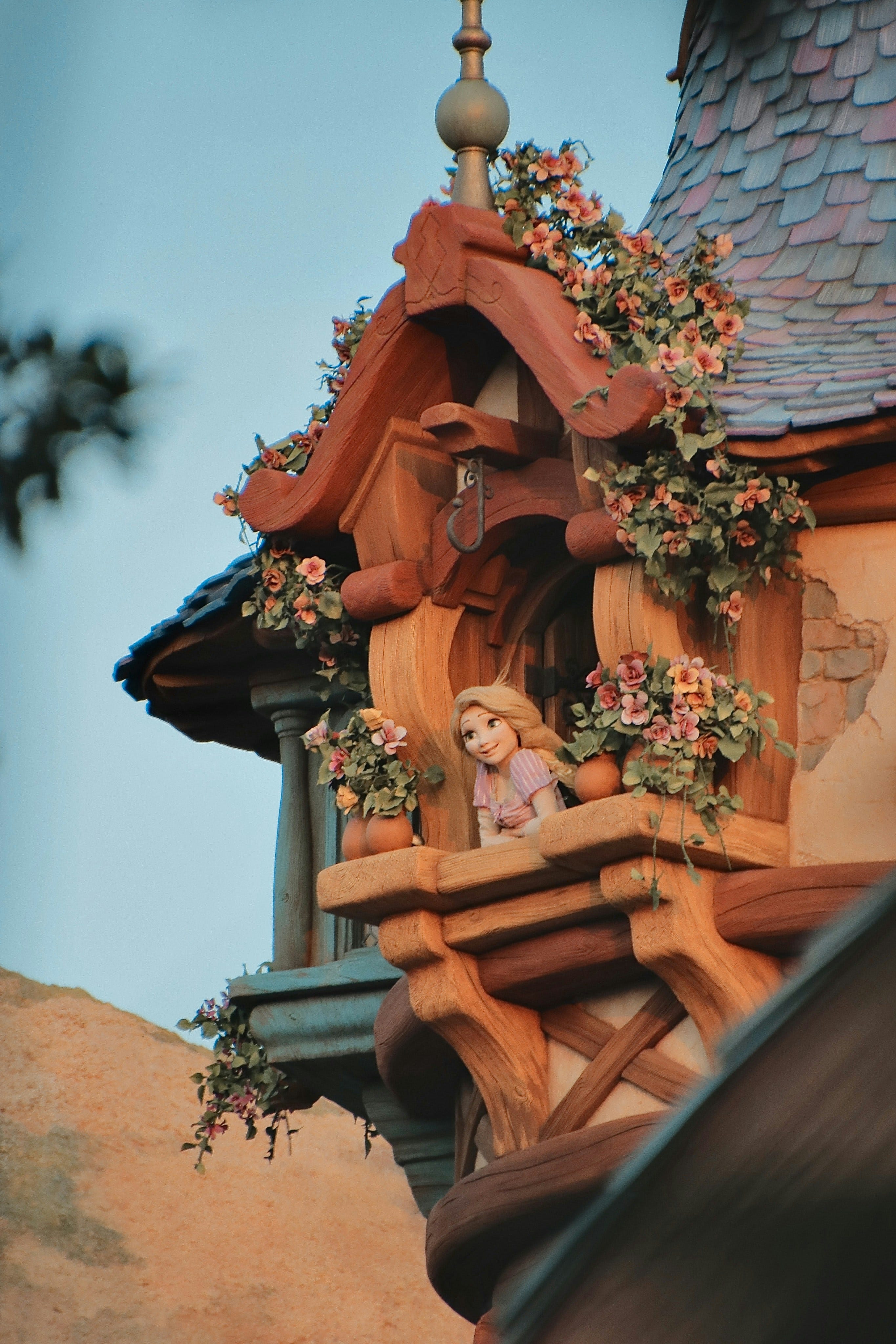
In Grimm’s tale, there are no lanterns, no golden glow. Rapunzel’s parents barter her away to a sorceress for stolen herbs. When she secretly meets her prince, she becomes pregnant, hinted at only by her “tightening dress.” Once discovered, she’s exiled to a barren desert. The prince leaps from her tower in despair and is blinded by thorns. They reunite only after long years of suffering. Her tears restore his sight, but the life they might have had is already gone.
And these are just the polite stories. Look deeper, and the shadows lengthen.
The wider canon gets darker still.
Esmeralda is executed in The Hunchback of Notre Dame; Quasimodo dies beside her body.
Mowgli burns the jungle and is rejected by both humans and animals in The Jungle Book.
Hercules murders his wife and children.
Pocahontas is abducted and dies at twenty-one.
Pinocchio is tortured, mutilated, and nearly executed.
Some versions of Mulan end in her suicide.
Tarzan’s tale begins with murder and the killing of his ape mother.
Beauty and the Beast is rooted in coercion, not romance.
Andersen’s Snow Queen, the seed for Frozen, is a bleak meditation on abduction and dread.
The Fox and the Hound ends in the pointless death of both friends.
The Black Cauldron is steeped in undead armies and ritual sacrifice.
The original Aladdin enslaves, deceives, and kills.
And beneath The Lion King is Hamlet: a story that famously ends with a stage full of corpses.
So what did we do, generation after generation, faced with tales like these?
We didn’t abandon or erase them. We adapted them.
Not to deceive, but to survive.
Across continents and centuries, humanity has taken the jagged edges of our inheritance and sanded them down. We softened what was once sharp. We brightened what was once bleak. We rewrote the endings into something we could sleep through.
Most cultures eventually chose comfort over cruelty, mercy over literalism, hope over horror. Not universally, not uniformly, but consistently enough that the gentler versions endured.
We like to pretend we’ve outgrown happy endings. That adulthood demands grit, complexity, and moral ambiguity. Yet our reading habits, our cinema choices, our streaming queues betray us.
We still crave stories where
order returns
love is dependable
evil announces itself
loss is temporary
goodness is rewarded
closure is guaranteed.
The older tales trained us to expect suffering. The newer ones trained us to imagine the world as it could be.
Softness isn’t a denial of reality. It’s a decision about how we want to live inside it.
We don’t choose happy endings because they’re truer. We choose them because they’re kinder. They let us breathe.
Fairy tales have never been about factual accuracy. They’ve always been about agency: the right to reshape fear, revise destiny, and redirect inherited dread into futures we can live with.
That might be the oldest magic running through every version of every tale: the human instinct to weather the dark, and reach, stubbornly and deliberately, for the light. Not because it is guaranteed, but because it is ours to choose.